A Bacteria That Makes You Have Your Baby Early
 For the latest data on COVID-19 and pregnancy, visit CDC at https://www.cdc.gov/coronavirus/2019-ncov/demand-extra-precautions/pregnancy-breastfeeding.html.
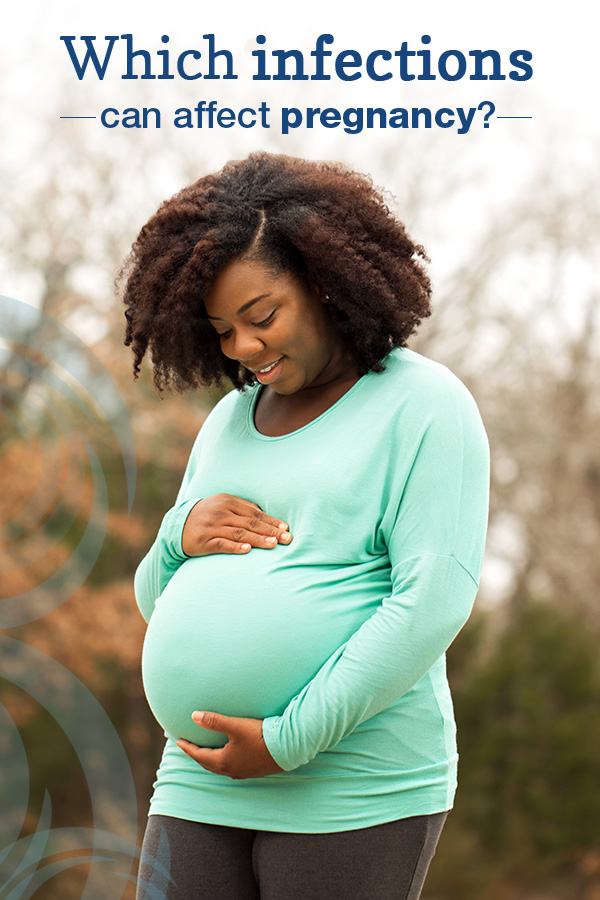
Infections that can affect the health of the pregnant woman, the pregnancy, and the babe subsequently delivery include (but are not limited to):
- Bacterial vaginosis is the virtually mutual vaginal infection in women of reproductive age. Information technology increases the risk of contracting sexually transmitted infections (STIs) and may play a role in preterm labor. The condition results from a alter in the remainder of bacteria that ordinarily live in the vagina. Having unprotected sex and douching can increase the risk of bacterial vaginosis. The Centers for Disease Control and Prevention (CDC) recommends that pregnant women get tested for bacterial vaginosis if they take symptoms and get treated if necessary.1
- Chlamydia infection during pregnancy is associated with an increased chance of preterm birth and its complications.two If the infection is present and untreated at the time of delivery, information technology tin can lead to middle infections or pneumonia in the infant.1 In most hospitals, infants' optics are routinely treated with an antibiotic ointment shortly after birth. The ointment can prevent blindness from exposure to chlamydia bacteria during delivery in case the pregnant woman had an undetected infection.
- Cytomegalovirus (CMV) is a common virus present in many torso fluids that can be spread through close personal contact, such as kissing or sharing eating utensils, as well every bit sexual contact. The virus unremarkably does not cause health problems, simply once it is in a person's body, it stays there for life and can reactivate at different times. A pregnant woman may non fifty-fifty know she has the infection, and she may pass the virus on to her fetus, causing congenital CMV infection. Almost infants with congenital CMV infection never show signs or have health problems. However, some infants accept health problems such equally hearing or vision loss, seizures, or intellectual disabilities that are credible at nascency or that develop afterwards during infancy or childhood.3 Currently, routine screening for CMV during pregnancy is not recommended. Researchers are working on treatments for CMV and vaccines to attempt to prevent new infections during pregnancy and to reduce the take a chance of manual to the babe.fourCongenital CMV infection tin be diagnosed by testing a newborn babe's saliva, urine, or blood. Treatment with antiviral drugs may decrease the risk of health problems and hearing loss in some infected infants.
- 5th disease is caused past homo parvovirus type B19. The virus causes a common childhood disease that spreads easily from person to person. Children who go information technology usually have a fever and a red rash on their cheeks. Parvovirus B19 usually does not crusade problems for pregnant women or the fetus, but in rare cases, the woman might have a miscarriage or the fetus could develop anemia. There is no vaccine or treatment for fifth affliction. You tin can reduce your take chances of being infected with parvovirus B19 or infecting others by fugitive contact with people who accept parvovirus B19 and by thoroughly and regularly washing your hands. Sometimes health intendance providers recommend testing pregnant women to run across if they are immune to the virus already.
- Untreated gonorrhea infection in pregnancy has been linked to miscarriage, preterm nascency and low birth weight, premature rupture of the membranes surrounding the fetus in the uterus, and infection of the fluid that surrounds the fetus during pregnancy. Gonorrhea can also infect an infant during commitment equally it passes through the birth canal. If untreated, infants can develop middle infections and blindness. In most hospitals, infants' eyes are routinely treated with an antibiotic ointment shortly after nascency to preclude center issues from exposure to gonorrhea during delivery, in instance the pregnant woman had an undetected infection. Treating gonorrhea as soon as information technology is detected in pregnant women reduces the risk of transmission.
- Group B streptococcus (GBS) can cause serious health bug in infants. Just giving antibiotics during labor tin foreclose the spread of GBS, so it's important to become tested for the infection during pregnancy. Learn more about GBS and pregnancy.
- Significant women who get infected with genital herpes belatedly in pregnancy have a high run a risk of infecting their fetus. The risk of infection is particularly high during delivery.i Herpes infections in newborns are serious and potentially life-threatening. Infection with the herpes virus during pregnancy or at the time of commitment can pb to brain damage, incomprehension, and damage to other organs. Rarely, herpes infection during pregnancy can lead to serious complications in the mother, including astringent liver damage and possibly death.
- If a pregnant woman has had genital canker in the past, there are medications that she tin have to reduce the hazard that she will accept an outbreak, which also reduces the adventure to her fetus.
- If a adult female has active canker sores when she goes into labor, the infant can be delivered by cesarean section to reduce the chance that the baby volition come in contact with the virus.5
- If a woman is infected with hepatitis B virus (HBV) during pregnancy, the virus could infect her fetus. The likelihood of manual depends on when during pregnancy the mother was infected. If the mother gets the infection later in her pregnancy, the risk that the virus will infect her fetus is quite loftier. If the infection occurs early in pregnancy, the gamble of the virus infecting the fetus is much lower. For more than information about Hep B during pregnancy, visit the Centers for Disease Command and Prevention (CDC) website. In infants, HBV can exist serious and can lead to chronic liver disease or liver cancer later in life. In addition, infected newborns have a very high risk of becoming carriers of HBV and can spread the infection to others.
- In some cases, if a adult female is exposed to HBV during pregnancy, she may be treated with a special antibody to reduce the likelihood that she will go the infection.
- All healthy infants should be vaccinated against HBV to give them lifelong protection.
- Infants built-in to women with evidence of ongoing HBV infection (HBV surface antigen positive) should also receive hepatitis B hyperimmune globulin every bit soon as possible after birth.7
- Hepatitis C virus (HCV). CDC offers more than data about HCV.
- HIV/AIDS . HIV tin exist passed from mother to infant during pregnancy before birth, at the time of delivery, or later nascence during breastfeeding.vi
- Human papillomavirus (HPV). CDC offers more data near HPV, including vaccine recommendations.
- Listeria or listeriosis is a serious infection ordinarily caused by eating food contaminated with a particular blazon of bacteria. Infection during pregnancy can pb to pregnancy loss, stillbirth, preterm nativity, or life-threatening infection of the newborn. Listeriosis is nearly frequently associated with eating soft cheeses and raw milk, but contempo outbreaks have been associated with fresh and frozen produce. Prevention recommendations include checking food labels to avoid eating unpasteurized cheese (made from raw milk) and other actions. Learn more about preventing listeria during pregnancy.
- Lyme disease is the most common vector-borne disease in the Us. Information technology is acquired past strains of the bacteriaBorrelia and is transmitted through the bite of certain species of ticks. The National Institute of Allergy and Infectious Affliction has more than data on lyme disease. In addition, the CDC provides a handout almost pregnancy and lyme disease (PDF one.2 MB)
- Getting rubella (sometimes called High german measles) during pregnancy can cause bug with the pregnancy equally well as nascency defects in the babe. Health care providers recommend that women get vaccinated against rubella before they get significant. Learn more about rubella and pregnancy.
- Syphilis may pass from an infected mother to her fetus during pregnancy. The infection has been linked to preterm nascence, stillbirth, and, in some cases, death shortly later birth. Untreated infants who survive tend to develop problems in many organs, including the encephalon, eyes, ears, heart, skin, teeth, and bones. All pregnant women should be screened for syphilis during their first prenatal visit. Women considered to be high risk should be screened again in the tertiary trimester.1
- Toxoplasmosis is a disease caused by a parasite that can be present in cat feces or used true cat litter. Cats get the parasite from eating small animals or birds. In humans, the affliction is usually mild, but if the parasite passes from a pregnant woman to the developing fetus, it tin crusade intellectual disabilities, blindness, or other problems. Women who are trying to get pregnant or are pregnant can take steps to prevent exposure to the parasite, such as having someone else clean or change the cat litter box and wearing prophylactic gloves to handle cat litter or while gardening.
- Trichomoniasis. CDC offers more than information about trichomoniasis.
- Zika is caused by a virus spread mainly by the seize with teeth of a certain type of mosquito, merely it is also spread through sexual contact. Although its symptoms are usually mild, Zika infection during pregnancy can cause pregnancy loss and other pregnancy complications, equally well equally birth defects and other problems for the babe.
CDC provides additional information on infections during pregnancy and sexually transmitted infections (STIs) and pregnancy.
Citations
Close Citations
- Centers for Affliction Control and Prevention. (2016). STDs during pregnancy - CDC fact sheet (detailed). Retrieved January 17, 2017, from https://www.cdc.gov/std/pregnancy/stdfact-pregnancy-detailed.htm
- Rours, Grand. I., Duijts, L., Moll, H. A., Arends, 50. R., de Groot, R., Jaddoe, V. Westward., et al. (2011). Chlamydia trachomatis infection during pregnancy associated with preterm delivery: A population-based prospective cohort study.European Journal of Epidemiology , 26(six), 493–502. Retrieved January xviii, 2017, from https://www.ncbi.nlm.nih.gov/pubmed/21538042
- Centers for Affliction Command and Prevention. (2010). Cytomegalovirus (CMV) and congenital CMV infection. Retrieved Dec 28, 2015, from http://www.cdc.gov/cmv/index.html
- Krause, P. R., Bialek, S. R., Boppana, Due south. B., Griffiths, P. D., Laughlin, C. A., Ljungman, P., et al. (2013). Priorities for CMV vaccine development. Vaccine, 32(1), iv–10. Retrieved Jan eighteen, 2017, from https://world wide web.ncbi.nlm.nih.gov/pmc/articles/PMC4623576/
- Medline Plus. (2017). Genital Herpes. Retrieved January 18, 2017, from http://world wide web.nlm.nih.gov/medlineplus/ency/article/000857.htm
- American College of Obstetricians and Gynecologists. (2012). HIV and pregnancy. Retrieved Jan xviii, 2017, from http://world wide web.acog.org/Patients/FAQs/HIV-and-Pregnancy

- The American Higher of Obstetricians and Gynecologists. (2019). Hepatitis B and hepatitis C in pregnancy. FAQ093. Retrieved December xxx, 2020, from https://www.acog.org/womens-health/faqs/hepatitis-b-and-hepatitis-c-in-pregnancy
 BACK TO Summit
Source: https://www.nichd.nih.gov/health/topics/pregnancy/conditioninfo/infections
0 Response to "A Bacteria That Makes You Have Your Baby Early"
Post a Comment